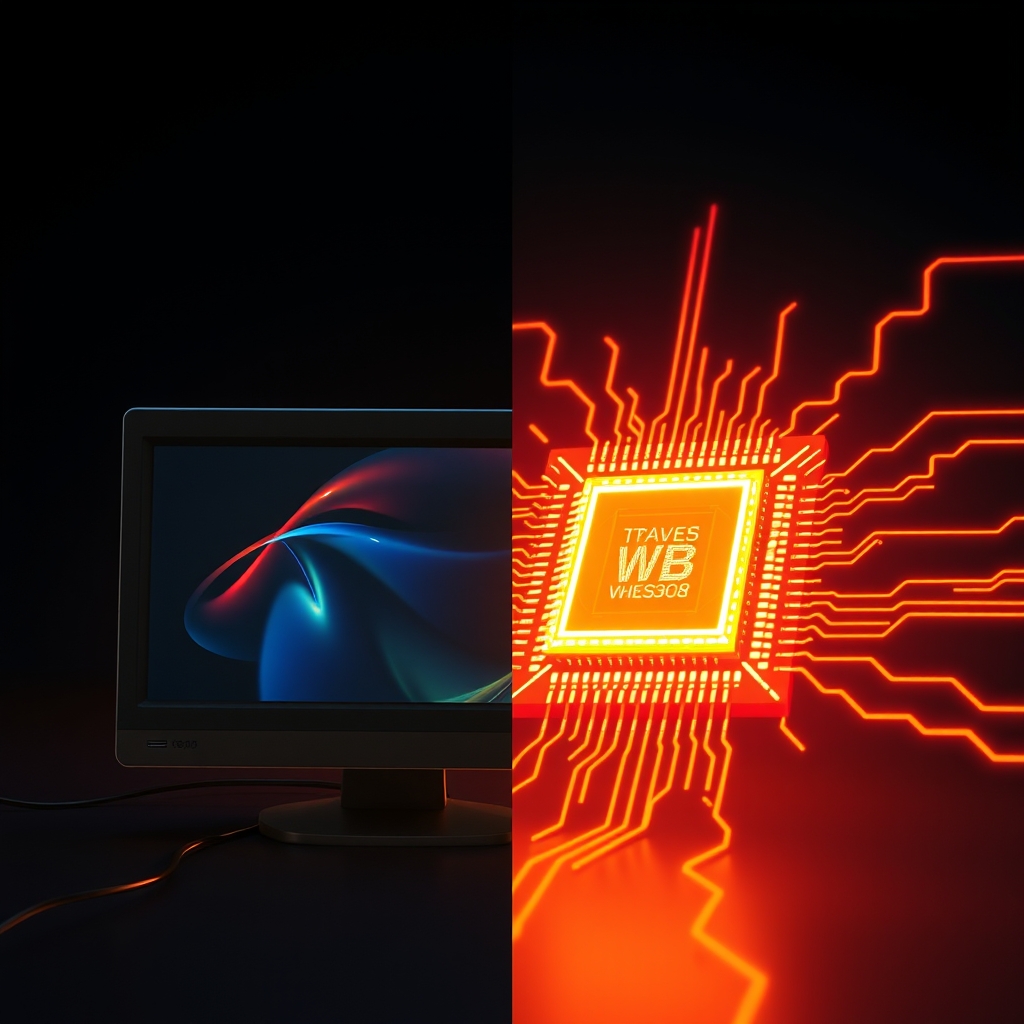
The technical evolution of browser-based gaming represents one of the most profound architectural transformations in modern software engineering, transitioning from proprietary, CPU-bound browser plugins to open-standard, hardware-accelerated WebGL and WebAssembly (Wasm) pipelines. By eliminating the systemic security vulnerabilities, memory leaks, and garbage collection pauses of legacy runtimes, modern browser technologies execute console-grade 2D and 3D interactive graphics within sandboxed environments with zero client installation.
In the contemporary web ecosystem, titles such as 2048 Original, Clumsy Bird, and Retro Vector Tunnel render complex physics and particle simulations directly on the user’s graphics hardware. Understanding the historical bottlenecks that doomed legacy web plugins illuminates how modern web standards achieve locked 60 FPS performance across desktop and mobile devices alike.
1. The Era of Proprietary Plugins: Macromedia and Adobe Flash
Between 1996 and 2010, web browsers were primarily document-oriented engines restricted to static HTML layout trees, CSS styling, and rudimentary GIF animations. Delivering interactive games inside a browser required third-party binary plugins operating via the Netscape Plugin Application Programming Interface (NPAPI):
                      LEGACY PLUGIN STACK (1996–2020)
       ┌────────────────────────────────────────────────────────┐
       │ Host Browser Process (Netscape, Internet Explorer, FF) │
       │   │                                                    │
       │   ▼ (Unchecked NPAPI Interface)                        │
       │ Proprietary Binary Plugin (Adobe Flash Player / Shockwave)
       │   ├── ActionScript Virtual Machine (AVM1 / AVM2)       │
       │   ├── Monolithic Software Vector Rasterizer (CPU-Bound)│
       │   └── Direct OS Memory Allocations (Unsandboxed)       │
       │   │                                                    │
       │   ▼                                                    │
       │ Host Operating System (Buffer Overflows, Zero-Day RCE) │
       └────────────────────────────────────────────────────────┘
The Rise of ActionScript and SWF Bytecode
Originally developed by Charlie Jackson, Jonathan Gay, and Michelle Welsh as FutureSplash Animator in 1995, the technology was acquired by Macromedia in 1996 and subsequently rebranded as Flash.
Flash introduced the Shockwave Flash (.swf) binary container, combining:
- Vector graphic Bézier curves defined by mathematical coordinate nodes.
- A temporal multi-track timeline supporting keyframe interpolation.
- The ActionScript Virtual Machine (AVM1, and later AVM2), executing an ECMAScript-derived programming language.
Indie developers flocked to web portals like Newgrounds, Kongregate, and Armor Games. For over a decade, Flash was the undisputed global engine of digital indie game culture, giving birth to legendary titles and entire game genres.
The Fatal Liabilities of Plugin Architectures
Despite its cultural dominance, the plugin architecture suffered from three fatal structural vulnerabilities that made its demise inevitable:
- Catastrophic Security Vulnerability Surface: Because NPAPI plugins executed outside the browser’s internal security perimeter, Flash Player accumulated over 1,100 Common Vulnerabilities and Exposures (CVEs). Malicious
.swffiles routinely exploited heap spray techniques and memory corruptions to achieve Arbitrary Remote Code Execution (RCE) on host systems. - CPU Rasterization and Thermal Throttling: Early Flash engines relied entirely on software rendering. The host CPU was forced to compute Bézier curve rasterization on every tick, consuming 100% of single-core thread capacity, spinning laptop cooling fans, and depleting lithium-ion laptop batteries within an hour.
- The Mobile Guillotine (Steve Jobs’ 2010 Manifesto): In April 2010, Apple CEO Steve Jobs published his famous open letter “Thoughts on Flash”, permanently barring the Flash plugin from the iPhone and iPad. Jobs cited reliability failures, extreme battery drain, security exploits, and the refusal to support touch interfaces. This single strategic decision sealed the historical fate of proprietary web runtimes.
2. The Open Standards Revolution: HTML5 Canvas and Web Audio
Recognizing that proprietary plugins were a structural hazard to the open internet, the World Wide Web Consortium (W3C) and the Web Hypertext Application Technology Working Group (WHATWG) ratified the HTML5 specification, integrating multimedia, graphics, and audio directly into the native browser engine.
                     MODERN OPEN WEB GAMING STACK
       ┌────────────────────────────────────────────────────────┐
       │ Multi-Process Web Browser (Chromium, Gecko, WebKit)   │
       │   │                                                    │
       │   ▼ (Same-Origin Sandboxed Renderer Thread)            │
       │ Standards-Based Web APIs:                              │
       │   ├── HTML5 <canvas> (2D Bitmaps & Sprite Blitting)   │
       │   ├── WebGL 2.0 (Khronos OpenGL ES 3.0 via ANGLE GPU)  │
       │   ├── Web Audio API (Low-Latency Audio Node Graphs)    │
       │   └── WebAssembly (Near-Native Memory-Safe Bytecode)   │
       │   │                                                    │
       │   ▼                                                    │
       │ Direct GPU Composition via Metal / Vulkan / DirectX 12 │
       └────────────────────────────────────────────────────────┘
The 2D Canvas API (<canvas>)
The introduction of the <canvas> element provided developers with a raw, immediate-mode bitmap surface accessible directly via JavaScript:
$$\text{ctx} = \text{canvas.getContext(‘2d’)}$$
Using CanvasRenderingContext2D, developers could blit bitmap sprites, render vector paths, and manipulate raw pixel arrays without external libraries. Fast-paced puzzle titles like Falling Blocks Retro demonstrated that lightweight JavaScript engines could maintain a locked 60 FPS tick rate while consuming less than 50 megabytes of RAM.
The Web Audio API: Sub-10ms Acoustic Synthesis
Prior to the Web Audio API, browser sound relied on the primitive <audio> tag, which suffered from unpredictable buffering latencies of 100 to 300 milliseconds—unusable for interactive sound effects.
The Web Audio API introduced a modular, directed audio node graph: $$\text{AudioSourceNode} \xrightarrow{\text{GainNode}} \xrightarrow{\text{BiquadFilterNode}} \xrightarrow{\text{SpatialPanner}} \text{AudioDestination (Hardware DAC)}$$
Running on a high-priority real-time audio thread decoupled from the main UI thread, Web Audio achieves sub-10-millisecond acoustic response times, hardware-synchronized spatial panning, and real-time procedural sound wave synthesis.
3. WebGL and the GPU Revolution: OpenGL in the Browser
While Canvas 2D met the requirements of classic retro and puzzle titles, intensive 3D rendering and complex particle physics required direct programmatic access to the client’s Graphics Processing Unit (GPU).
In 2011, the Khronos Group—consisting of Apple, Google, Mozilla, and hardware vendors—standardized WebGL (Web Graphics Library):
- Architecture: A 1:1 JavaScript mapping of the embedded OpenGL ES standard.
- Programmable Shaders: Allows developers to write custom vertex and fragment shaders using the GLSL (OpenGL Shading Language) compiler running directly on GPU silicon.
- The ANGLE Translation Layer: Developed by Google, ANGLE (Almost Native Graphics Layer Engine) translates WebGL API calls into native platform GPU commands:
- On Windows: Translates to Direct3D 11 / Direct3D 12.
- On macOS and iOS: Translates to Metal.
- On Linux and Android: Translates to Vulkan / Native OpenGL.
WebGL 2.0 (ratified in 2017 and universally supported today) brought 3D texture mapping, transform feedback, floating-point render targets, and uniform buffer objects into the browser, allowing titles like Retro Vector Tunnel to render thousands of real-time geometric primitives per frame.
4. WebAssembly (Wasm): Breaking the JavaScript Performance Ceiling
Despite monumental advancements in browser JavaScript engines (such as Google’s V8, Mozilla’s SpiderMonkey, and Apple’s JavaScriptCore), JavaScript possesses fundamental architectural characteristics that inhibit high-performance game execution:
               JAVASCRIPT JIT vs WEBASSEMBLY EXECUTION
   [JavaScript Source]                                 [C++ / Rust / Zig]
           │                                                   │
           ▼                                                   ▼
     Parse & AST Tokenize                               Clang / LLVM Compiler
           │                                                   │
           ▼                                                   ▼
     Bytecode Generation                                .wasm Binary Bytecode
           │                                                   │
           ▼ (Dynamic Profiling)                               │ (Single Compile Pass)
     JIT Compilation (TurboFan)                                │
           │                                                   ▼
     [!] De-optimization Spikes!                       Native Machine Code
     [!] Garbage Collection Pauses!                    (Zero GC / Flat Memory)
The Limitations of Dynamic JIT Compilation
- Dynamic Typing De-Optimizations: JavaScript engines use speculative Just-In-Time (JIT) compilation. If an object’s hidden class (shape) changes unexpectedly during runtime, the engine must de-optimize the machine code back to interpreted bytecode, causing microsecond execution spikes.
- Garbage Collection (GC) Stop-the-World Pauses: JavaScript is an automatically garbage-collected language. As temporary game loop objects are allocated, the GC must periodically pause thread execution to mark and sweep dead memory. If a garbage collection sweep takes 20 milliseconds, a frame is dropped, producing visible stutter.
The WebAssembly Architectural Paradigm
Introduced in 2017 by the W3C, WebAssembly (Wasm) is a low-level, binary code format designed as a compilation target for native high-performance languages like C++, Rust, Zig, and Go:
- Stack-Based Virtual Machine: Wasm executes a compact, pre-compiled binary format that can be decoded and compiled to native machine instructions at near-instantaneous streaming speed.
- Linear Memory Model: WebAssembly operates inside a contiguous, sandboxed array buffer (
ArrayBuffer). Memory allocation and deallocation are managed manually by the developer (e.g., viamalloc/freeor Rust’s borrow checker). There is zero garbage collection overhead. - SIMD and Multi-Threading: Modern WebAssembly supports 128-bit SIMD (Single Instruction, Multiple Data) vector instructions and true POSIX-like multi-threading via
SharedArrayBufferand Web Workers.
High-end commercial engines like Unreal Engine, Unity, and Godot now compile their core C++ physics and rendering runtimes directly to .wasm, allowing titles like Speed Racing 2D to deliver rock-solid physics simulation without frame pacing jitter.
5. Technical Comparison: The Four Epochs of Browser Game Engineering
The following evolutionary matrix contrasts the four major architectural epochs of web gaming from 1996 to the present:
| Technical Dimension | Epoch 1: Adobe Flash (AVM2) | Epoch 2: HTML5 Canvas 2D | Epoch 3: WebGL 2.0 | Epoch 4: WebAssembly + WebGPU |
|---|---|---|---|---|
| Active Dominance Era | 1996 – 2015 | 2010 – Present | 2017 – Present | 2024 – Emerging |
| Standardization Body | Proprietary (Macromedia/Adobe) | Open Web (W3C / WHATWG) | Open Standard (Khronos Group) | Open Standard (W3C GPU for the Web) |
| Sandboxing Model | Unsandboxed (NPAPI host risk) | Strict Same-Origin Browser Sandbox | Strict Same-Origin Browser Sandbox | Hardware-isolated Wasm linear memory |
| Rendering Target | CPU Software Rasterizer | GPU-Accelerated 2D Context | OpenGL ES 3.0 via ANGLE GPU | Native Vulkan, Metal, DirectX 12 |
| Memory Management | Automatic AVM Garbage Collection | V8 Engine Garbage Collection | V8 Engine + GPU Buffer VRAM | Manual Linear Memory (Zero GC) |
| Audio Latency | High (150–300 ms) | Moderate to High (<audio>) | Sub-10 ms (Web Audio API) | Zero-latency Web Audio Worklet |
| Average Startup Time | Slow (Plugin initialization) | Instant (< 200 ms) | Fast (< 500 ms shader compile) | Near-Instant Streaming Compilation |
| Mobile Interoperability | Defective / Barred on iOS | 100% Native iOS & Android | 100% Native iOS & Android | Universal Modern Mobile GPU Support |
6. The Next Frontier: WebGPU and Compute Shaders
The next major leap in browser interactive graphics is WebGPU, the official successor to WebGL:
- Why WebGL is Being Replaced: WebGL was built upon OpenGL, an architectural model developed in 1992 that does not align with modern GPU design (which relies on multi-threaded command encoders and unified memory architectures).
- Direct Hardware Mapping: WebGPU provides low-overhead, native bindings directly to modern GPU backends: Apple’s Metal, Khronos’ Vulkan, and Microsoft’s DirectX 12.
- General-Purpose GPU (GPGPU) Compute Shaders: Unlike WebGL which was restricted to rendering pixels, WebGPU introduces raw Compute Shaders. Game engines can now execute physics simulations, ragdoll kinematics, particle colliders, and real-time ray tracing calculations directly on the GPU across thousands of parallel execution cores within a web browser tab.
Frequently Asked Questions
Can old Flash games still be played safely on the modern web?
Yes, but exclusively through WebAssembly-based Flash emulators like Ruffle. Ruffle is an open-source Flash Player emulator written in Rust that compiles directly to WebAssembly. Instead of running unsafe native plugins, Ruffle translates legacy ActionScript bytecode into modern Canvas and WebGL calls inside the browser’s secure sandbox. It allows users to enjoy historic Flash games without exposing their computer to memory corruption exploits.
What is the primary difference between WebAssembly and JavaScript in game performance?
JavaScript is dynamically typed and garbage-collected; the browser engine must continuously profile the running code, compile it on the fly, and pause execution periodically to clean up unused memory. WebAssembly is statically typed and executes pre-compiled binary instructions with manual memory management. For physics engines that must calculate thousands of rigid-body collisions within a strict 16.67ms window, WebAssembly guarantees consistent frame timing without garbage collection micro-stutter.
Why does WebGPU perform better than WebGL on modern laptops and smartphones?
WebGL requires the browser driver to validate global state and translate draw calls sequentially on a single CPU thread, creating an architectural bottleneck. WebGPU is designed around modern explicit graphics APIs: it decouples command recording from submission, allowing game engines to encode graphics and compute pipelines across multiple CPU cores in parallel. Furthermore, WebGPU minimizes driver overhead, delivering higher frame rates and significantly lower battery consumption.