Consistently reaching the 2048 tile in Gabriele Cirulli’s classic sliding-tile puzzle is not a matter of luck or reactive swiping; it is a deterministic optimization problem governed by monotonic gradient preservation, degree-of-freedom restriction, and Expectiminimax evaluation heuristics. By restricting play to three primary directional vectors, anchoring the highest-value tile in an immutable corner, and structuring secondary tiles in a descending snake-like hierarchy, human players can increase their victory consistency from under 5% to over 95%.
In our browser catalog, 2048 Original serves as the quintessential benchmark for testing mathematical patience and lookahead depth. Below, we deconstruct the underlying probability distributions, formal AI solver weights, and emergency recovery protocols that allow players to conquer the 2048 threshold and push onward toward 4096 and 8192.
1. Combinatorial Foundations and the Spawning Probability Engine
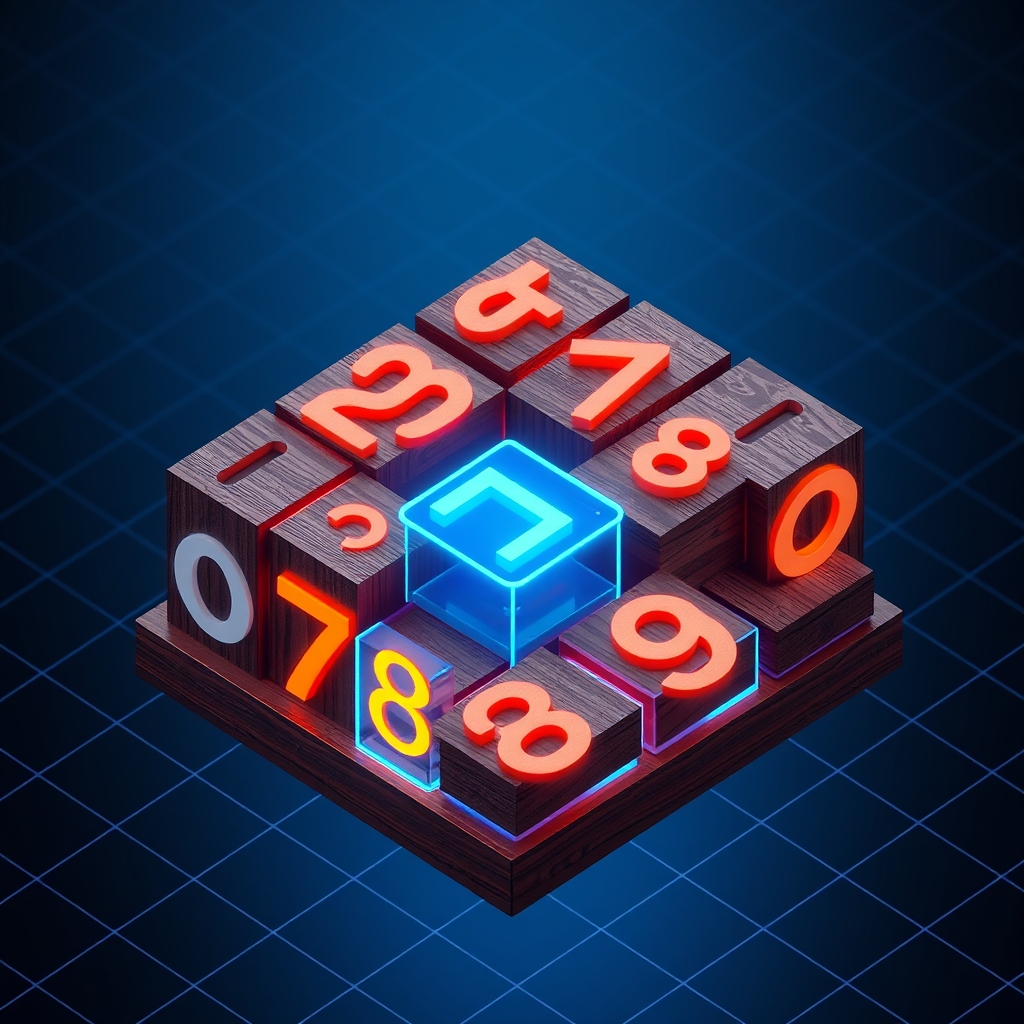
Created in March 2014 by Italian web developer Gabriele Cirulli (drawing inspiration from earlier mobile games 1024 and Threes!), 2048 is played on a strict $4 \times 4$ Euclidean grid consisting of exactly 16 discrete cells.
                  THE 4x4 EXPONENTIAL STATE-SPACE
                      Column 0   Column 1   Column 2   Column 3
                    ┌──────────┬──────────┬──────────┬──────────┐
             Row 0  │  (0, 0)  │  (0, 1)  │  (0, 2)  │  (0, 3)  │
                    ├──────────┼──────────┼──────────┼──────────┤
             Row 1  │  (1, 0)  │  (1, 1)  │  (1, 2)  │  (1, 3)  │
                    ├──────────┼──────────┼──────────┼──────────┤
             Row 2  │  (2, 0)  │  (2, 1)  │  (2, 2)  │  (2, 3)  │
                    ├──────────┼──────────┼──────────┼──────────┤
             Row 3  │  (3, 0)  │  (3, 1)  │  (3, 2)  │  (3, 3)  │  <-- Anchor Row
                    └──────────┴──────────┴──────────┴──────────┘
The Power-of-Two Summation Series
The game mechanics enforce an irreversible merge rule: two tiles sharing identical values $2^n$ collide under an applied directional vector to synthesize a single tile of value $2^{n+1}$: $$2^n + 2^n = 2^{n+1}$$
To synthesize the target 2048 tile ($2^{11}$), the player must accumulate a cumulative base tile sum of 2,048. Because each merge halves the number of active tiles representing that value, constructing a 2048 tile requires a minimum of 1,024 successful merges if built exclusively from 2 tiles:
$$\sum_{i=1}^{10} 2^i = 2^{11} - 2 = 2046$$
The Spawning Probability Distribution
After every legal sliding move that alters the board state, the game engine randomly selects one currently vacant grid cell $(x, y) \in \text{EmptyCells}$ and spawns a new tile according to a fixed probability distribution:
- $\mathbb{P}(\text{Tile} = 2) = 0.90$ (90% probability)
- $\mathbb{P}(\text{Tile} = 4) = 0.10$ (10% probability)
Because $10%$ of all spawns deliver a 4 tile, the theoretical minimum number of moves to reach 2048 ranges between 920 and 1,024 moves.
The fundamental hazard of the game stems from grid scarcity: with only 16 available cells, allowing low-value tiles (2 and 4) to disperse chaotically across the center rapidly fragments contiguous open space, triggering a fatal board lockout where zero adjacent legal merges exist.
2. The Expectiminimax Evaluation Function: How AI Engines Dominate 2048
In 2014, computer scientists and AI researchers developed automated 2048 solvers utilizing the Expectiminimax Algorithm—a specialized variant of Minimax designed for games featuring stochastic (probabilistic) environmental responses. High-performance AI solvers achieve a 99.8% win rate to 2048 and routinely reach the 16384 tile by evaluating board states using four mathematically weighted heuristics:
               EXPECTIMINIMAX STATE EVALUATION FUNCTION
                                   │
      ┌────────────────┬───────────┴───────────┬────────────────┐
      ▼                ▼                       ▼                ▼
[Monotonicity]   [Smoothness]            [Empty Cells]    [Corner Anchor]
Weight: ~45%     Weight: ~25%            Weight: ~20%     Weight: ~10%
Values decrease  Minimizes delta between Maximize open    Lock max tile
along vectors    adjacent numbers        spaces (N >= 3)  at (3, 0)
$$\text{Score}(\mathcal{B}) = W_{\text{mono}} \cdot S_{\text{mono}} + W_{\text{smooth}} \cdot S_{\text{smooth}} + W_{\text{empty}} \cdot \log_2(N_{\text{empty}}) + W_{\text{corner}} \cdot S_{\text{corner}}$$
- Monotonicity ($S_{\text{mono}}$): Measures whether tile values strictly increase or decrease along both horizontal and vertical axes. A monotonically sorted row ensures that merging tiles flow smoothly into one another without trapping low-value tiles behind high-value walls.
- Smoothness ($S_{\text{smooth}}$): Calculates the numerical disparity between adjacent cells:
$$S_{\text{smooth}} = -\sum_{(u, v) \in \text{Neighbors}} |\log_2(\text{val}_u) - \log_2(\text{val}_v)|$$
Smoothness penalizes placing a
2tile directly adjacent to a1024tile, as closing a 9-power gap requires dozens of intervening maneuvers. - Empty Cell Buffer ($N_{\text{empty}}$): Open space represents computational survival. When open cells drop below 3 ($N_{\text{empty}} \le 2$), the risk of catastrophic deadlock escalates exponentially.
- Corner Invariance ($S_{\text{corner}}$): Heavily rewards anchoring the maximum tile value in one fixed corner coordinate.
3. Principle 1: Corner Anchoring and the Three-Direction Invariant
The paramount strategic rule for human players is Corner Anchoring. Designate a single fixed corner—conventionally the Bottom-Left coordinate $(3, 0)$—as the permanent sanctuary for your highest-value tile.
       OPTIMAL DIRECTIONAL VECTOR CONSTRAINTS (BOTTOM-LEFT ANCHOR)
                            [ UP ]  <-- BANNED VECTOR (NEVER PRESS!)
                               ▲
                               │  (Forbidden)
                               │
       [ LEFT ] ◄──────────────┼──────────────► [ RIGHT ]
       (Primary Vector)        │                (Controlled Vector)
                               ▼
                           [ DOWN ]
                      (Primary Vector)
The Prohibited Vector Rule
If your anchor is designated at the Bottom-Left:
- You must use DOWN and LEFT as your primary operational vectors (80% of all moves).
- You may use RIGHT when necessary, provided your anchor row is fully saturated.
- NEVER PRESS UP.
Pressing the UP arrow key is the single most common cause of sudden game termination. The moment you press UP, your entire matrix shifts upward, vacating the bottom-left coordinate. The game engine immediately spawns a random 2 or 4 tile at the bottom. Your 1024 tile is now stranded in Row 2 or Row 1, surrounded by low-value garbage that prevents it from ever returning to the corner.
The Saturated Row Defense
Before ever pressing RIGHT, you must ensure that your bottom anchor row (Row 3) is 100% saturated with four non-zero tiles: $$\text{Row 3} = [1024, 512, 256, 128]$$
If Row 3 is completely full, pressing RIGHT will slide the upper rows without shifting the bottom row, preserving your anchor tile at $(3, 0)$.
4. Principle 2: The Monotonic Snake Progression
Anchoring the highest tile in the corner is ineffective if the surrounding tiles are organized randomly. High-tier mastery requires arranging tiles in a continuous, descending Snake Hierarchy:
                 THE MONOTONIC SNAKE GRADIENT (S-CURVE)
        Row 0:     [   2  ] ──► [   2  ] ──► [   4  ] ──► [   8  ]  (Spawning Tier)
                                                                │
                                                                ▼
        Row 1:     [  64  ] ◄── [  32  ] ◄── [  16  ] ◄── [   8  ]  (Intermediate Tier)
                     │
                     ▼
        Row 2:     [ 128  ] ──► [ 128  ] ──► [ 256  ] ──► [ 256  ]  (Feeder Tier)
                                                                │
                                                                ▼
        Row 3:     [ 1024 ] ◄── [ 512  ] ◄── [ 256  ] ◄── [ 128  ]  (Anchor Tier)
The Cascading Domino Reaction
When tiles follow this descending S-curve, executing a single merge in Row 0 triggers an automated, multi-tiered domino collapse:
2 + 2in Row 0 merges into a4.- The
4merges into the adjacent4to form an8. - The
8merges downward into Row 1 to form a16. - The
16collapses into32,64,128,256, and finally into Row 3, where512 + 512merges into the glorious 2048 tile.
This cascading collapse empties massive territory across the top three rows in a single frame, resetting board entropy and granting you dozens of open cells to construct the next power-of-two block.
5. The Emergency Recovery Protocol: Fixing a Dislodged Corner
Even disciplined players occasionally make an involuntary blunder or are forced into an unavoidable UP move when no other legal direction exists.
If your anchor tile is dislodged from $(3, 0)$ and a 2 tile spawns beneath it:
- HALT IMMEDIATELY: Stop fast-swiping. Rapid instinctive moves will cement the trapped state into an unrecoverable failure.
- Do Not Panic-Swipe Down: Pressing Down immediately will not fix the problem; the
2will simply sit beneath the1024, locking it into Row 2 permanently. - The Sidelong Extraction Protocol:
- Focus 100% of your energy on growing the intrusive rogue
2tile into a matching value (e.g., merge it into a4, then an8). - Simultaneously build a secondary identical tile in the column directly adjacent to your stranded high tile.
- Execute a horizontal merge that slides your major tile sideways, simultaneously absorbing the obstacle and allowing your next downward vector to re-seat the primary tile flush against the bottom wall.
- Focus 100% of your energy on growing the intrusive rogue
6. Technical Matrix: Tile Milestones, Merges, and Complexity Ratings
The following structural matrix outlines the mathematical milestones, score accumulation, and state-space hazards encountered on the journey from tile 2 to 2048:
| Target Tile ($2^n$) | Power ($n$) | Minimum Base Merges Required | Cumulative Score Generated | Ideal Board Density Occupied | AI Lookahead Depth Required | Primary Structural Hazard |
|---|---|---|---|---|---|---|
| 64 | $2^6$ | 32 merges | 384 points | 25% (4 cells) | 1–2 plies | Careless dispersion; zero risk |
| 128 | $2^7$ | 64 merges | 896 points | 37% (6 cells) | 2–3 plies | Breaking the three-direction rule |
| 256 | $2^8$ | 128 merges | 2,048 points | 50% (8 cells) | 3–4 plies | Saturated rows without matching pairs |
| 512 | $2^9$ | 256 merges | 4,608 points | 62% (10 cells) | 4–6 plies | Monotonic gradient inversion in Row 2 |
| 1024 | $2^{10}$ | 512 merges | 10,240 points | 75% (12 cells) | 6–8 plies | Prematurely pressing the banned UP vector |
| 2048 | $2^{11}$ | 1,024 merges | 22,528 points | 87% (14 cells) | 8–10 plies | Grid starvation ($N_{\text{empty}} \le 1$); fatal deadlock |
| 4096 | $2^{12}$ | 2,048 merges | 49,152 points | 93% (15 cells) | 10–12 plies | Requires flawless snake hierarchy maintenance |
7. Comparative Spatial Reasoning: 2048 vs Other Matrix Puzzles
Mastering the mathematical discipline of 2048 provides transferable spatial heuristics applicable across our wider puzzle catalog:
- Permutation Parity in Sliding Tile 16 Escape: Both 2048 and the 15-puzzle operate on a $4 \times 4$ matrix. While 2048 merges numbers via irreversible collisions, the 15-puzzle manipulates position via parity-preserving empty cell exchanges.
- Fixed Space Packing in Polyomino Tangram Fit: In polyominoes, you pack fixed geometric figures into bounded space without creating voids; in 2048, you pack descending numerical gradients to preserve contiguous empty cells.
- Pacing and Buffer Management in Falling Blocks Retro: Managing the top feeder tier in 2048 mirrors maintaining a flat, clean surface in classic falling blocks.
Frequently Asked Questions
Is every randomly generated game of 2048 winnable?
Because new tiles spawn stochastically in random empty cells with a 90/10 split between 2 and 4, it is theoretically possible to encounter an “unwinnable” game due to hostile spawning RNG in the extreme endgame (e.g., when the board has only 1 open cell and the engine spawns an inconvenient 2 that blocks a required shift). However, mathematical analysis of Cirulli’s algorithm shows that over 98% of all games are winnable with optimal Expectiminimax play. Bad luck accounts for less than 2% of failures; human error accounts for the other 98%.
What is the absolute theoretical maximum tile possible on a 4x4 board?
The theoretical maximum tile that can be constructed on a standard $4 \times 4$ grid is $131,072$ ($2^{17}$). Reaching this astronomical tile requires filling all 16 cells with a descending sequence from $131,072$ down to $4$, where every single newly spawned tile is an optimal 4 tile (the 10% lucky spawn) appearing in the exact necessary cell on every single turn. The theoretical maximum score achievable under these mathematically perfect conditions is $3,932,156$ points.
Why is the bottom-left corner preferred over other corners?
Mathematically, all four corners (Top-Left, Top-Right, Bottom-Left, Bottom-Right) are identical in geometric symmetry. The preference for the Bottom-Left is purely ergonomic and cognitive for human players: most human visual systems scan top-to-bottom and left-to-right, making it natural to funnel lightweight incoming tiles from the upper-right quadrant down into the lower-left sanctuary. Choose whichever corner feels intuitive, but never switch corners mid-game.